

5 Supplements to Support Burnout Recovery
Supplements won’t fix the root cause of burnout, but a few evidence-based options may support your sleep, stress response, and mood while you rebuild the bigger foundations: rest, boundaries, and a life on your own terms that doesn’t cost your health.
Quick note: I’m not a medical professional. I’m sharing what I’ve learned from personal experience and research. This post is not medical advice, diagnosis, or treatment. Always check with a doctor or pharmacist before trying new supplements – especially if you take medications, have health conditions,etc.
1) Magnesium Bisglycinate (sleep + tension + “wired but tired”)
The best form of magnesium to try first is magnesium bisglycinate (glycinate). It’s popular because many people find it gentler on the stomache than magnesium citrate. When your nervous system won’t downshift, magnesium is often the first effective support and it’s easily available in most countries.
- Look for the label’s “elemental magnesium” amount (that’s what matters).
- Common routine: evening, 30–90 minutes before bed.
- Magnesium can interfere with absorption of some medications (ODS lists examples like certain antibiotics and bisphosphonates), so spacing doses matters.
- If magnesium upsets your stomach, lower the dose, switch form (glycinate to another), or split dose AM/PM.

2) B-Complex (stress depletion support)
When stress is high, you burn through the basics faster (sleep gets worse, appetite gets weird, caffeine goes up, meals get random). A reasonable-dose B-complex is often used as “nutritional insurance,” especially when your diet is chaotic. B vitamins are central to energy metabolism (your cells turning food into usable energy).
- Take it in the morning with food (some people feel a little “wired” if they take it late).
- Choose non-mega-dose formulas unless you’ve got clinician guidance.
- Note: Some B vitamins can cause side effects at high doses (for example, very high B6 long-term can be an issue), so avoid “extreme” formulas as a default.

3) Omega-3s (EPA/DHA) (mood + brain support)
Omega-3s won’t remove the feeling of stress, but they’re one of the better-studied “foundation” supplements, especially if you don’t eat fatty fish often. ODS notes that ALA conversion to EPA/DHA is limited, so you typically need EPA/DHA directly from fish or supplements if you want to raise those levels meaningfully.
- Look for a label that lists EPA and DHA clearly (not just “1000 mg fish oil”).
- Drugs.com discusses side effects and cautions at higher intakes (and to be careful with meds, especially blood thinners).
- If fish oil travels badly (heat), consider algal oil (plant-based EPA/DHA).

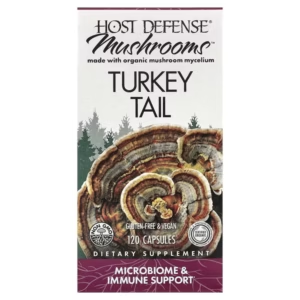
4) Turkey Tail Mushroom (microbiome & immune support)
A natural prebiotic, Turkey Tail is one of the most-studied mushroom species suggested to benefit microflora in the gastrointestinal ecosystem and for supporting a balanced immune response.
- Gut support during stress (when digestion feels “off”)
- General immune support
- Important: If you’re immunocompromised or on immunosuppressant meds, talk to a clinician before using immune-active supplements.
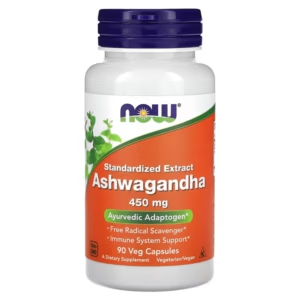
5) Ashwagandha (stress + sleep support)
Ashwagandha (Withania somnifera) is a traditional Ayurvedic herb often used as an “adaptogen” (a tool people use during high-stress seasons). It’s most commonly used for stress and sleep.
How I take it: I like mine with warm milk and honey before bed.
Important cautions: Avoid in pregnancy, and be cautious if you have thyroid issues, liver problems, or take sedating medications. If it makes you groggy the next day, lower the dose or take it earlier.
Can I take these together?
In many cases, yes but make sure you start simple with an easy-to-track schedule.
- Morning (with breakfast): B-complex + omega-3
- Midday (with lunch): Turkey Tail (optional)
- Evening: magnesium + ashwagandha (if using for sleep)
How to use these supplements without turning recovery into another full-time job
If you’re burned out, the last thing you need is a complicated routine that makes you feel like you’re failing at self-care too.
Here’s the simplest way to use this list:
- Pick your main problem: sleep, anxiety, mood, or energy
- Choose ONE supplement from the list to start (not five)
- Try it for 14 days and track 3 numbers daily: sleep / energy / anxiety (0–10)
- Keep what helps. Drop what doesn’t.
- Add the next thing only if you still need support
Other resources for those experiencing burnout
Powered by Me (Neha Sangwan, MD)
Powered by Me: From Burned Out to Fully Charged at Work and in Life is written for high performers who look “fine” on the outside but feel like they’re quietly running on fumes. Dr. Neha Sangwan frames burnout as a gradual, multi-layer energy drain—and offers a practical way to diagnose where your energy is leaking (physical, mental, emotional, social, spiritual) so you can fix the right thing instead of just “resting harder.”
What I like most (especially for digital nomads/entrepreneurs) is that the book doesn’t treat burnout as a motivation problem. It treats it like a system problem: boundaries, people-pleasing, chronic over-responsibility, and environments that reward you for ignoring your limits.

If you’re building a location-independent life, that phased model is especially useful, because nomad burnout often starts as “I’m just busy trying to build my best life,” and stays there until the body forces a hard stop.
Burnout symptoms checklist
The World Health Organization describes symptoms of burnout (occupational context) as:
- Energy depletion / exhaustion
- Increased mental distance from your job (negativism/cynicism)
- Reduced professional efficiency
Mayo Clinic’s burnout checklist overlaps strongly: dragging yourself to work, detachment, low energy, focus problems, low satisfaction, sleep changes, and unexplained headaches/GI issues.
How to prevent burnout
Supplements can support recovery, but they don’t replace the fundamentals: rest, real food, boundaries, sunlight, movement, and nervous system regulation. Burnout recovery is slow because your body is basically saying: “We’ve been in a state of stress for too long.” So the goal isn’t to push harder but instead to slow down and teach your system it’s safe to relax.
For digital nomads and remote workers, that often means building “routine” even when you don’t want to:
- a set start/stop time (even if you don’t feel like it)
- one screen-free block per day
- meals that stabilize blood sugar (protein + fat + fiber)
- movement that discharges stress (walks, yoga, nature)
- a weekly reset ritual (journaling, therapy, breathwork, nature, long bath… whatever works)
If you’re reading this and thinking “oh… this is me”. Please don’t wait until you crash.
If you’re in the “wired and tired” stage, this is your sign to slow down before your body forces you to. If you’re already in the crash stage, where rest doesn’t touch the exhaustion, you need to set time aside to recover.
Get help now (global crisis support)
If your burnout includes panic attacks, severe depression, or thoughts of harming yourself, please reach out for support right away. You don’t need to carry this alone and a therapist is just a google away.
If you’re in immediate danger: call your local emergency number, or go to the nearest emergency department.
- Europe (EU): 112 is the emergency number, free of charge across the EU. digital-strategy.ec.europa.eu
Common crisis numbers in major regions
- United States: Call/Text 988 (988 Suicide & Crisis Lifeline) 988 Lifeline
- Canada: Call/Text 988 (9-8-8 Suicide Crisis Helpline) 9-8-8: Suicide Crisis Helpline
- UK & Ireland: Samaritans 116 123 (free, 24/7) Samaritans
- Australia: Lifeline 13 11 14 (24/7 crisis support) Lifeline
- New Zealand: Lifeline 0800 543 354 or free text 4357 Lifeline
- South Africa: SADAG Suicide Crisis Helpline 0800 567 567 SADAG
- India: Tele-MANAS (Govt of India) 14416 (also listed: 1800-891-4416) Telemanas
You can build a life on your own terms. Just don’t make your nervous system pay the price for it.
If this post helped, feel free to share it with a friend who’s “living the dream” but quietly falling apart or if you’ve been through burnout too, I’d love to hear what helped you, please drop a comment or message me.
More articles you might like:
- How Digital Nomads Save Thousands with Pet Sitting in 2025
- Slow Travel Around The World for 12 Months of Perfect Weather
- The Reality of Pet Sitting Abroad: House Sitting as a Digital Nomad
- The Problem With Airbnb: Why Digital Nomads Should Rethink Short-Term Rentals
- Why Vintage Postcards Make the Best Minimalist Travel Souvenir
- The Ultimate Slow Travel Guide for Digital Nomads


